
Healthy eating does not require exotic ingredients or complicated calorie counting. One of the most practical tools available is the “balanced plate” — a simple visual guide to how much of each food group to put on your plate. Here is how it works, what the evidence behind it says, and how to apply it to everyday Pakistani meals.
Key takeaways
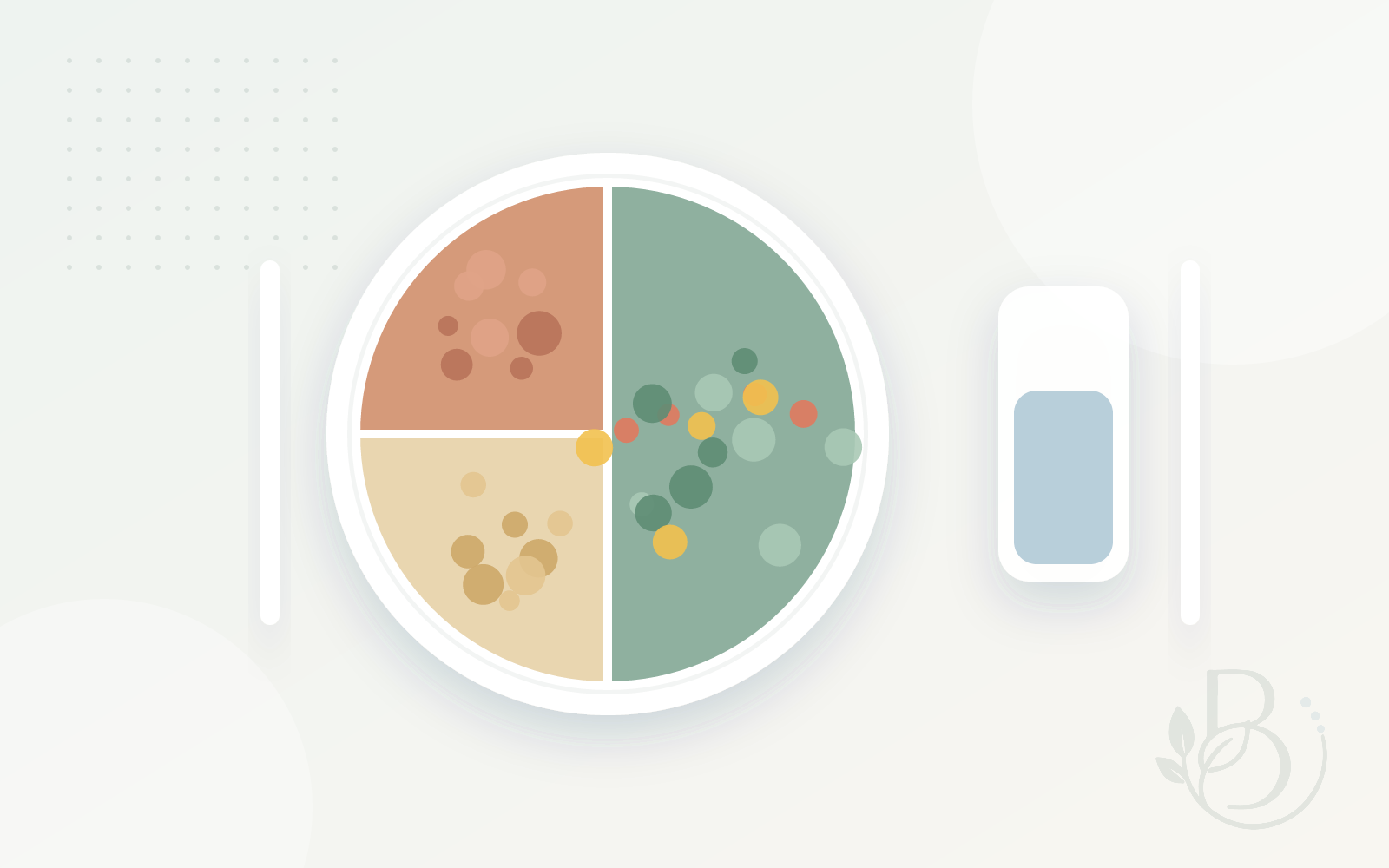
- Fill half the plate with vegetables and fruit, a quarter with whole grains, and a quarter with healthy protein.
- Aim for at least 400 g (five portions) of fruit and vegetables a day.
- Keep free sugars below 10% of daily energy — and ideally below 5%.
- Water is the best everyday drink; use oil and salt in measured amounts.
The balanced plate at a glance
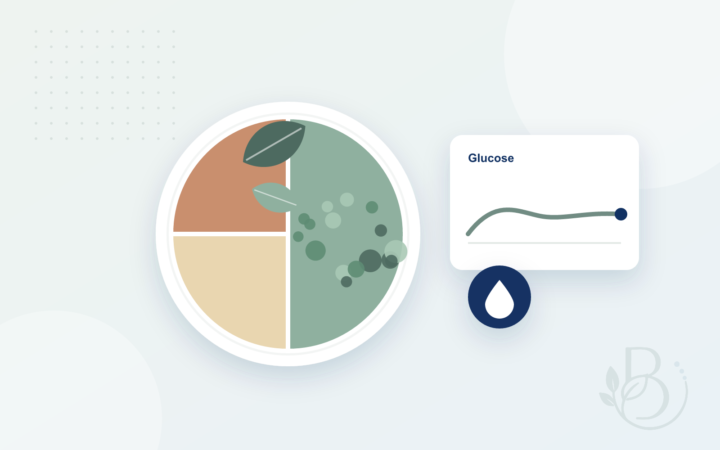
Harvard T.H. Chan School of Public Health’s Healthy Eating Plate is one of the best-known visual guides. It recommends filling half the plate with vegetables and fruit, a quarter with whole grains, and a quarter with healthy protein, using healthy plant oils in moderation and choosing water, tea or coffee with little or no sugar.1 The WHO’s healthy-diet advice follows the same principles.2
| Plate section | What it includes | Desi examples |
|---|---|---|
| ½ Vegetables & fruit | Colourful vegetables, salads and whole fruit | Bhindi, palak, lauki, tori, gobhi, kachumber salad, guava, oranges |
| ¼ Whole grains | Minimally processed grains and starchy foods | Chakki-atta roti, jau or bajra roti, oats, brown or parboiled rice |
| ¼ Healthy protein | Pulses, fish, poultry, eggs, nuts, dairy | Daal, chana, lobia, rajma, chicken, fish, eggs, yoghurt, paneer |
| Small amount of oil | Unsaturated plant oils | Canola, olive, sunflower or mustard oil — measured |
| Drink | Water and unsweetened drinks | Water, chaas, plain lassi, green tea, chai with little sugar |
Half the plate: vegetables and fruit
The WHO recommends eating at least 400 g — about five portions — of fruit and vegetables every day.2 A large meta-analysis found that higher intakes were associated with lower risk of heart disease, stroke, cancer and early death, with the lowest risk seen at around 800 g a day.3 In many Pakistani homes, vegetables appear mainly as a small side or are cooked down in lots of oil. Try making the sabzi the main event: a generous helping of vegetable salan, a big kachumber salad, and fruit as a snack instead of biscuits.
Seasonal is smart: local seasonal produce — guava and kinnow in winter, mangoes and melons in summer, spinach, carrots and peas in the cooler months — is usually cheaper, fresher and more nutritious.
A quarter of the plate: whole grains
Roti and rice are the heart of most Pakistani meals, so the type of grain matters. A systematic review in the BMJ linked higher whole-grain intake with lower risk of heart disease, cancer and death from all causes.4 Choose chakki atta over fine maida, try mixing in jau, bajra or besan, and keep rice to a sensible portion — or mix it with daal, chana or vegetables to increase fibre.
A quarter of the plate: healthy protein
Pulses are one of the great strengths of the Pakistani diet: daal, chana, lobia and rajma provide protein, fibre and minerals at low cost. Fish, chicken, eggs and dairy are also excellent choices. Red meat can be included in moderate amounts, while processed meats such as nuggets, sausages and salami are best kept occasional.1
Fats, sugar and salt: the finishing touches
The WHO advises that total fat stays below 30% of energy intake, with saturated fats below 10% and trans fats below 1%; that free sugars stay below 10% of energy (ideally below 5%); and that salt stays below 5 g a day.2 In practical terms:
- Measure oil with a spoon and avoid vanaspati ghee.
- Cut down on sugary drinks, juices and sweet chai — they are the biggest sources of free sugar for many people.
- Go easy on achar, papad, packaged snacks and restaurant food, which are often very salty.
Putting it together: a day of balanced plates
- Breakfast: vegetable omelette with one whole-wheat roti and a cup of chai with little sugar — or oats cooked in milk with fruit and nuts.
- Lunch: daal and mixed-vegetable salan, a small portion of rice or one roti, kachumber salad and raita.
- Snack: a seasonal fruit with a handful of roasted chana or nuts.
- Dinner: chicken or fish cooked with tomatoes and spices, sautéed vegetables and one roti.
Pakistan has its own food-based dietary guidelines, developed by the Government of Pakistan with the Food and Agriculture Organization (FAO), which emphasise diverse diets built from local staples.5 The balanced plate is a simple way to put those principles on the table at every meal. If you have a health condition such as diabetes, kidney disease or a heart condition, a nutritionist can adapt the proportions to your needs.
References
- Harvard T.H. Chan School of Public Health. Healthy Eating Plate. The Nutrition Source. nutritionsource.hsph.harvard.edu
- World Health Organization. Healthy diet — fact sheet. Geneva: WHO. who.int
- Aune D, Giovannucci E, Boffetta P, et al. Fruit and vegetable intake and the risk of cardiovascular disease, total cancer and all-cause mortality: a systematic review and dose-response meta-analysis of prospective studies. Int J Epidemiol. 2017;46(3):1029–1056.
- Aune D, Keum N, Giovannucci E, et al. Whole grain consumption and risk of cardiovascular disease, cancer, and all cause and cause specific mortality: systematic review and dose-response meta-analysis of prospective studies. BMJ. 2016;353:i2716.
- Food and Agriculture Organization of the United Nations. Food-based dietary guidelines — Pakistan. fao.org